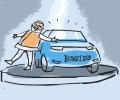
From Hyundai to Tata Motors, automakers are staring at a bleak future. With no succor provided in the Budget, the pain for companies is likely to continue for the next two quarters.

Driven by Hyundai Motors, exports of passenger cars from India jumped 28 per cent to 1,60,677 units in the financial year ended March 31, 2005.\n

Open order books in February breach 700,000; wait period for some models exceed a year.

Chinese electric carmaker BYD is focusing on launching vehicles in the Rs 25-45 lakh price range in India even as it continues to evaluate customer preferences and demand in more affordable segments, its Head of Electric Passenger Vehicles in India Rajeev Chauhan told Business Standard.

Maruti Suzuki, Hyundai, Honda Cars and Tata Motors posted single digit growth during the period under review while M&M reported decline in sales.

Maruti Suzuki India to hike prices of its vehicles across models by up to Rs 20,000 from January to offset rising costs.


Delhi, labelled the world's most polluted city in a 2014 World Health Organization survey, alone makes up about 7 per cent of total Indian auto sales.

Companies also said confidence was yet to return among buyers, with many holding back their decision to buy cars.

MSI in January increased prices by up to Rs 31,600.

Passenger vehicle wholesale in India increased by 14.19 per cent to 3,10,294 units in October against 2,71,737 units in the same month last year as companies despatched more units to dealers to cater to enhanced demand in the festive season, auto industry body SIAM said on Wednesday. According to the latest data by the Society of Indian Automobile Manufacturers (SIAM), two-wheeler sales also rose 16.88 per cent to 20,53,814 units, compared with 17,57,180 units in the same month last year. Motorcycle sales were at 13,82,749 units as against 11,16,886 units in October 2019, up 23.8 per cent.

The RBI on Thursday lowered the benchmark repurchase rate to 7.75 per cent from 8 per cent, the first reduction since May 2013.

Maruti Suzuki and Hyundai Motors are expected to see overseas sales fall sharply following the recent removal of an incentive scheme.

Passenger vehicle sales continue to drop in June; Maruti, Hyundai, Tata Motors, Toyota witness decline. Mahindra & Mahindra, however, reported a 4 per cent growth.
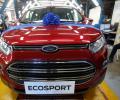
Ford, which had announced to quit the Indian market last year, said it was exploring the possibility of using one of its plants in India to produce electric cars for exports.

Even as India's passenger-vehicle sales touched a record high of 3.9 million units in 2022-23, growing 27 per cent over the previous financial year, the country's largest carmaker, Maruti Suzuki India (MSIL), said on Monday uncertainties in the electronic-component supplies might affect production in FY24. MSIL said the shortage of electronic components had some impact on production in FY23. "The company took all possible measures to minimise the impact.
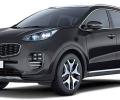
Though both brands belong to the same parent company, Hyundai has issued strict directives to dealer partners to withdraw their applications

The onus is on the banks to pass the benefit to customers.

In the US, the Hyundai i30 is marketed as the hatchback version of the Elantra sedan.
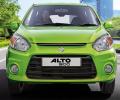
Top carmakers, including Maruti Suzuki India, Hyundai and Honda, are expecting a spike in their sales following the implementation of 7th Pay Commission recommendations.

The Hyundai Creta is practical, spacious, comfortable and feature loaded, making it an ideal package that most buyers look out for in the SUV segment, finds out Indian motoring website MotorBeam.

Maruti's sales of the compact segment comprising Swift, Estilo, Ritz, Dzire and Baleno went up by 9.9% to 45,579 units

Schools closed for a day, crops damaged; more downpour on cards

Maruti's 7 models in India's top ten selling passenger vehicles in 2016-17

The Hyundai Elantra is a well-known name in India, thanks to the striking design language used both the times it was introduced in the country, i.e. in the year 2000 and later in 2012. Now Hyundai has decided to launch the sixth generation car in India to re-capture the D-segment sedan throne. Indian automotive website MotorBeam.com got its hands on the car and decided to run the classy sedan through its paces.
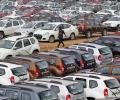
While customers in metro cities are still buying cars, quick growth is likely only from upcountry markets, where highways and roads are being built, and discretionary income and aspirations are rising.
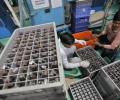
Exasperated by frequent labour strikes, the Tamil Nadu government has decided to give public utility status to Auto components makers. A move that has left labour unions fuming since, now, they won't be able to go on strike without issuing a notice of six weeks in advance.

Market leader Maruti Suzuki India's passenger vehicles sales declined by 2.34 per cent last month at 133,702 units. Hero MotoCorp reported total two-wheeler sales of 480,196 units last month, down 20.05 per cent.

Buying a second-hand car has become hassle-free, courtesy the presence of corporate players like Maruti Suzuki's True Value and Mahindra and Mahindra's First Choice.

The top six auto brands are: Maruti Suzuki, Hyundai, Tata Motors, Toyota, Kia and Mahindra & Mahindra.

'If it is your second car (electric vehicle), you typically keep it for travel within the city.' 'And the first car (internal combustion engine-run vehicles) can then be used to travel to some other cities.'
Traditional heavy spenders on cricket properties Vodafone, car maker Hyundai Motors, Reliance Communications and soft drink major Coca-Cola have decided to stay out of the bidding for the sponsorship of the Indian cricket team with the Board of Control for Cricket in India setting a steep base price to Rs 510 crore for a four-year deal for one of cricket's most coveted sponsorships.

Fit and finish is next to faultless for the price, but we did find a few hard plastics on the steering and a few switches that felt out of place

Several carmakers, including car market leader Maruti Suzuki India pulled the plug on diesel models citing higher costs for BSVI variants leaving buyers with limited options.

The challenges of transition to stricter emission norm BS-VI from BS-IV and compliance to new safety norms thereby making vehicles costlier are lurking around the sector.

Two-wheeler sales were down 15.24 per cent in July to 12,81,354 units as compared with 15,11,717 units in the same month last year.

Exports in August were up 10.3 per cent to 12,472 units from 11,305 units in the same month of previous year.
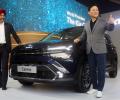
'India is the sixth-largest market for the Kia Corporation, and contributes 8 to 9 per cent to our global sales.' 'We are eyeing 10 per cent market share over the next few years depending on customer demand and new product innovations.'

Overall, we feel that the Hyundai Elantra is a very good car for people who aren't into aggressive driving but for those who want refinement and comfort along with a long list of features and a pleasant driving experience.
